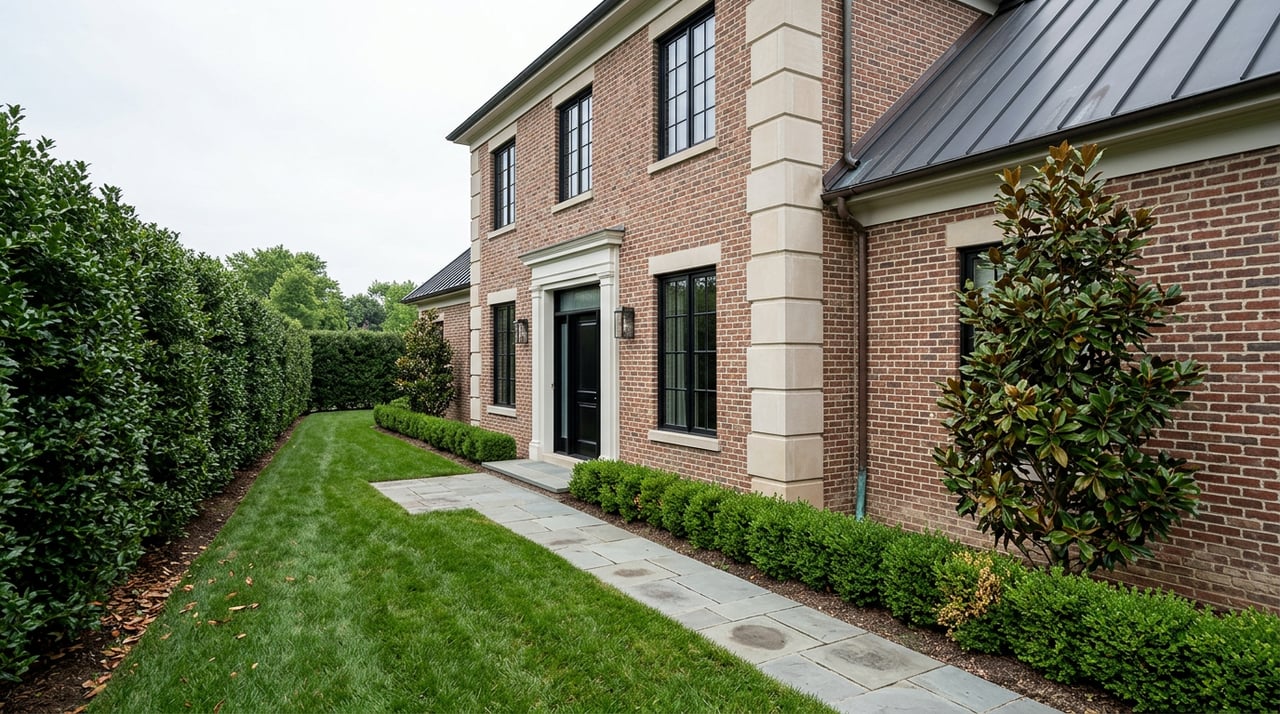
A buyer who wants more house in Nichols Hills sometimes reaches for the obvious move: buy the vacant lot next door, take down the fence, and build across both parcels. It reads like simple addition. Under the city's own zoning code, it isn't. When two lots are combined in Nichols Hills, the side yard setbacks can double, cutting into exactly the space a buyer assumed they were gaining. That single ordinance is a useful entry point into a bigger pattern: Nichols Hills is a fully independent city of just two square miles, and its small scale changes both what you can build and what you can trust in the price data you're reading before you make an offer.
What the Ordinance Says About Combining Lots
Nichols Hills has its own city code, separate from Oklahoma City's, and its zoning ordinance is specific about what happens when a buyer tries to assemble a bigger lot. Per the city's zoning code, combining two lots automatically doubles the required side yard setback, unless the lots are no more than 20 feet wide or the City Manager has approved a deed for a combined lot under the city's subdivision regulations. In practice, that means a buyer who pays for two parcels to gain width can end up with a narrower buildable envelope than a straightforward single-lot purchase would have given them, unless they secure the deed exception first.
This isn't a hypothetical for people idly browsing listings. It's the kind of detail that only surfaces once a buyer is deep into due diligence, usually after they've already fallen in love with the idea of a wider footprint. Anyone considering a two-lot assembly in Nichols Hills should confirm the setback math and the deed-approval path with the Planning & Zoning office before writing an offer that assumes both lots will build out the way a simple sum of their widths suggests.
The Listing Median Dropped 26% in a Month, While Sales Tell a Different Story
The same smallness that makes this ordinance matter also explains why Nichols Hills' headline price statistics can look alarming and mean far less than they appear to.
As of September 2026, portal data put the median list price in Nichols Hills at $886,000, down 26% from the prior month and 25% from a year earlier. Look at closed sales instead of listings and the picture gets stranger, not clearer: in March 2026, the reported median sale price was $1.0 million, a 29.4% year-over-year drop, built on just four home sales that month, down from eight the year before. Widen the window to a rolling 12 months through September 2026, and the same market shows a median sale price of $1,010,000, down a much calmer 7% from the prior 12-month period.
Three data providers, three windows, three very different stories from the same city. That's not a data quality problem so much as a math problem. Nichols Hills has roughly 1,858 total housing units in its two square miles, and only a handful trade hands in any given month. When your sample size is four or ten closings, one large estate sale or one distressed listing can move the median by double digits without anything about the underlying market actually changing. The 12-month figure smooths that out, which is why its 7% decline looks so much less dramatic than the monthly snapshots. A buyer or seller reading only the month-over-month number risks reacting to noise dressed up as a trend.
The practical takeaway: in a market this thin, the trailing 12-month median is a far more honest gauge of direction than any single month's headline, and even that number should be read as a range rather than a verdict.
Six Zoning Districts Under One Median
There's a second reason the citywide median flattens more than it reveals. Nichols Hills isn't zoned as one uniform residential product. The city's Building Commission guidelines lay out six separate residential districts, each with its own development rules: E-1 Estate, E-2 Urban Estate, R-1-75 Single-Family, R-1-60 Single-Family, R-2 Two-Family, and R-3 Multi-Family. A handful of non-residential districts, including a Church District, an Office District, a Retail Business District, and a Town Center Overlay, round out the map.
That means a $2.5 million estate lot in the E-1 district and a smaller home on an R-1-60 lot a few blocks away are getting averaged into the same citywide median, even though they're governed by different setback and lot-size rules and represent genuinely different products. Anyone comparing price per square foot across two Nichols Hills listings should first confirm which of the six residential districts each address sits in. A number that looks like an apples-to-apples comparison on a listing sheet may actually be comparing an estate lot to a two-family lot.
The Building Commission Decides What Comes Next, Not the Price
For buyers whose plan includes a teardown, the price they pay is only the first hurdle. Nichols Hills created its own Building Commission in 2019, and it reviews every demolition, design, and new construction project in the city, regardless of zoning district. Before a demolition permit can be issued, the applicant needs a Certificate of Approval, and critically, the city's guidelines specify that an existing dwelling cannot be demolished until a replacement dwelling has already been approved through that same review process.
In other words, a buyer can't simply purchase an older home, tear it down, and figure out the new design later. The replacement has to clear Building Commission review first. This sequencing shows up in the market already: one 2026 listing description for a completed teardown-rebuild in Nichols Hills noted that the original 1950s residence on the corner lot was removed entirely before the new construction went up, with the new home featuring a heated pool, a private putting green, and finishes throughout. That kind of project doesn't happen on a whim. It happens because the buyer sequenced the approval before the demolition, exactly as the ordinance requires.
What This Means Before You Write an Offer
A few practical steps follow directly from all of this:
- Confirm which of the six residential zoning districts a specific address falls under before comparing its price per square foot to a neighboring listing. E-1 Estate and R-2 Two-Family rules are not interchangeable.
- If a two-lot assembly is part of your plan, get the setback math in writing from the Planning & Zoning office before you assume the combined parcel will build out wider than a single lot would.
- If a teardown-rebuild is the goal, expect to have an approved replacement design in hand before a demolition permit is issued. Budget time for the Building Commission's review process into your closing and construction timeline, not after it.
- Read Nichols Hills price data over a trailing 12-month window rather than reacting to a single month's median. With only a handful of closings most months, one estate sale can swing the headline number without reflecting a real shift in the market.
A Couple of Questions Worth Asking Directly
Does a steep month-over-month drop in the median price mean Nichols Hills is cooling off? Not on its own. With as few as four sales in a given month, one high-value or low-value closing can move the median by double digits. The trailing 12-month figure, which has moved far less, is a more reliable read on direction.
Can I build a duplex in Nichols Hills? The specific district matters, so confirm the lot's permitted use before assuming a duplex is allowed.
How long does Building Commission review take before I can demolish an existing home? The city doesn't publish a fixed turnaround. The city's Building Commission application packet requires a $750 fee before the City Clerk sets a hearing date. The replacement dwelling design must be approved before a demolition permit will be issued, so the review needs to be built into your project timeline rather than treated as a formality.
None of this makes Nichols Hills harder to love. It makes it a market where the fine print does more work than the headline. If you're weighing a purchase here, whether it's a straightforward resale, a two-lot assembly, or a full teardown-rebuild, Darian Woolbright can walk through the zoning district, the setback math, and the Building Commission timeline for a specific address before you write an offer. Request a private listing consultation to get the numbers that actually apply to the property you're considering, not just the citywide median.
This article is general information, not legal, tax or financial advice. Consult a qualified professional about your situation.